Mapping the Cost Events Between a Linear Ticket and a Merged Pull Request
A ticket-to-merge cost model shows where cheaper code generation shifts spending.
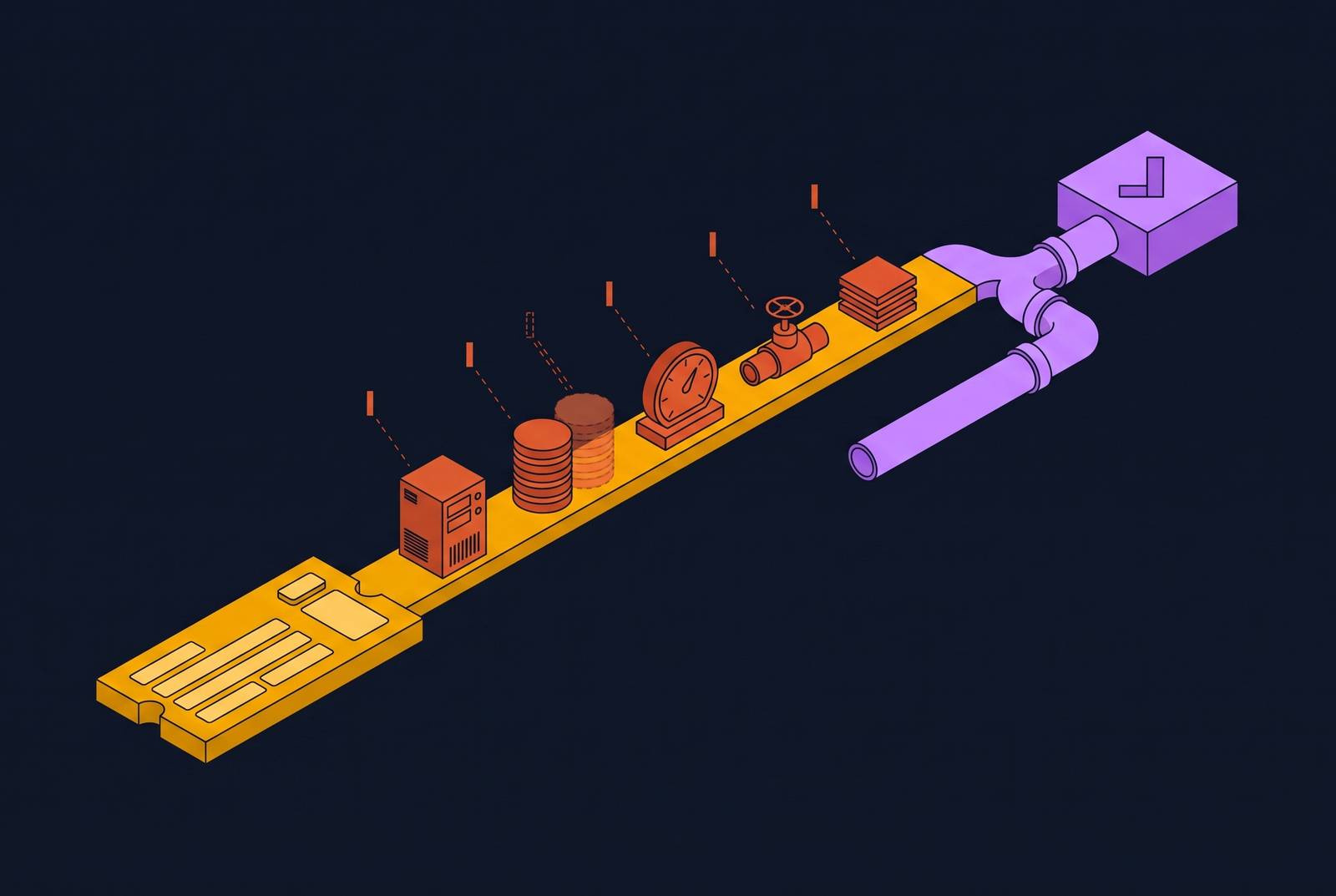
The best cloud coding agents for engineering teams fit the whole path from a Linear ticket to a merged pull request. Linear Agent connects workspace context to Claude Code and Codex, while GitHub Agentic Workflows runs agents inside GitHub Actions. Selecting between these workflows requires accounting for triage, execution, review, and CI/CD together, because cheaper code generation can simply move cost downstream.
Why the ticket-to-PR pipeline is now a four-stage cost system, not a single tool decision
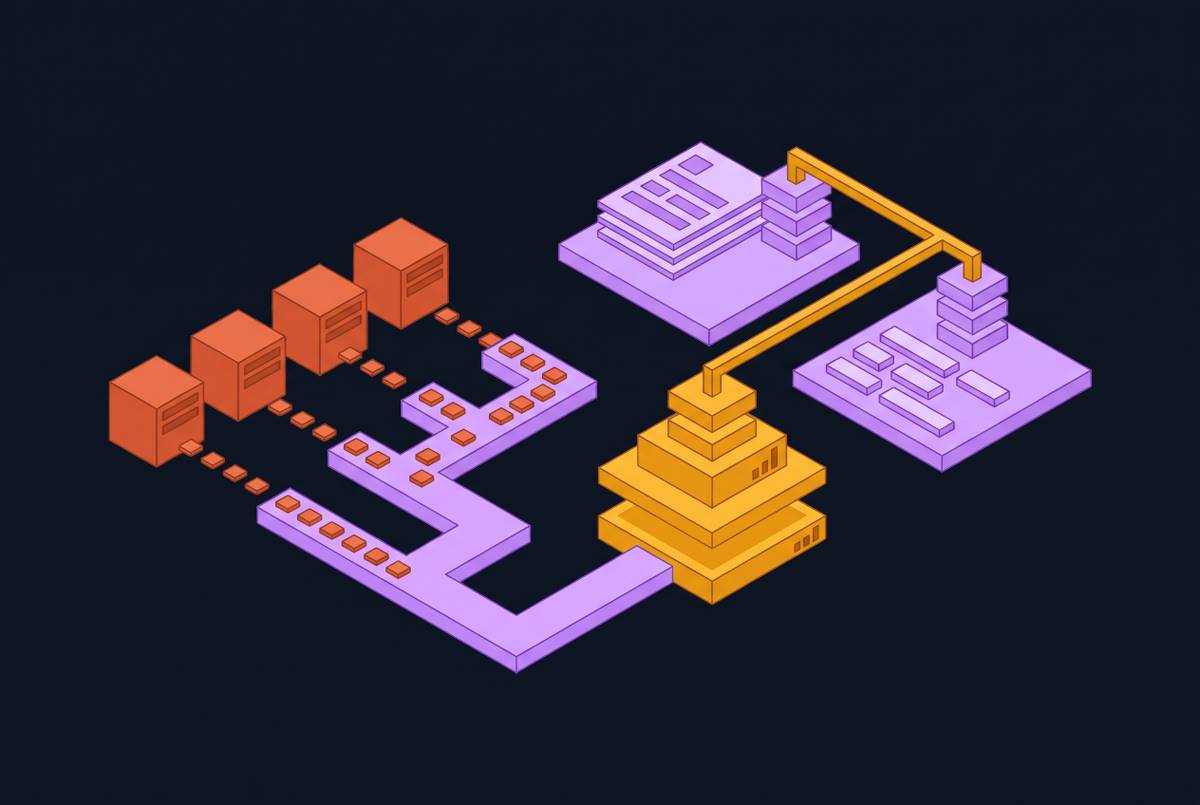
The ticket-to-PR pipeline consists of four distinct cost-generating stages, namely triage and context assembly, cloud agent execution, PR review, and CI/CD. Each stage has its own cost model and failure mode. Token consumption dominates some operations, while human attention or build capacity constrains others. A budget that treats the agent subscription as the entire expense therefore leaves substantial work unaccounted for.
The old model no longer describes the system. One engineer using one editor on one task is different from an agent that can pick up a ticket, write code, open a PR, and trigger CI without a human intervening. Linear natively integrates with GitHub, GitLab, Slack, and Sentry, and its agent can use Claude Code and Codex with sessions grounded in issue details, history, customer requests, and related work. Those connections bring ticket intake into the execution architecture, where it becomes part of running the work.
GitHub Agentic Workflows provides another route through that architecture. Its generally available workflows run coding agents inside GitHub Actions, triggered by Markdown files and sandboxed behind a compile step, with read-only permissions by default and an Agent Workflow Firewall. These controls shape the execution environment, but execution remains only one stage. Faster output there increases the work arriving at review and CI, so the relevant unit of evaluation is the complete path to a merge.
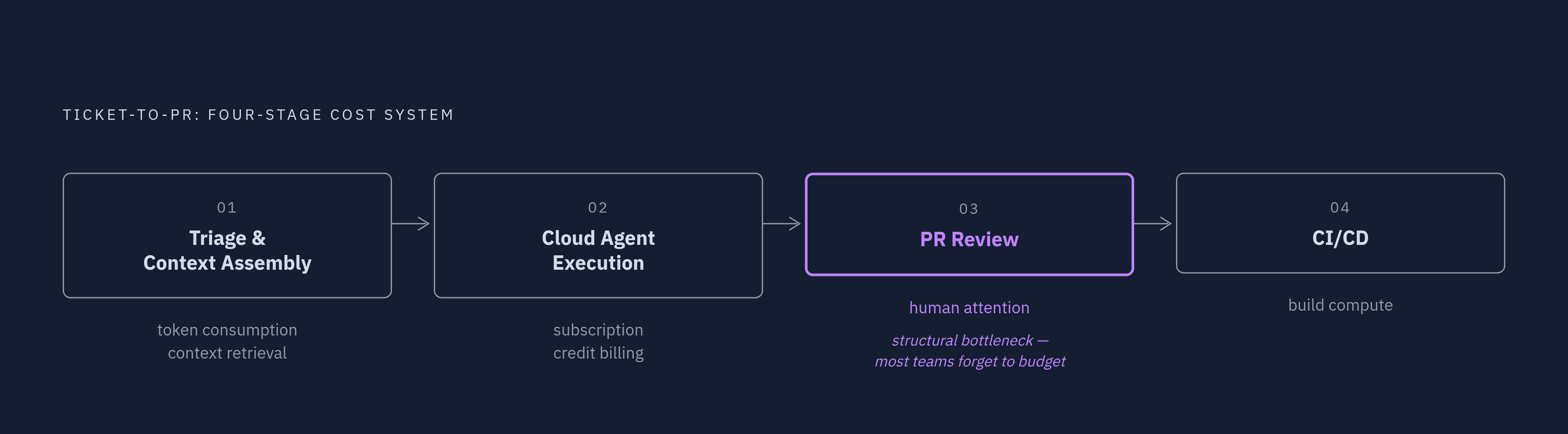
Stage one: what triage and context assembly actually cost before a line of code is written
An agent must locate the information needed to understand a ticket and determine what work belongs within its scope. In many sessions, that navigation consumes more tokens than writing the fix itself. Budgeting only for coding overlooks the work required to make coding possible.
The distinction is between finding context and using it. A ticket may provide the initial request, while its history, related work, and customer feedback supply the information needed to interpret it. Linear grounds agent sessions in that workspace context rather than treating each issue as an isolated prompt. Even with the efficiency gain, retrieving and processing that information is not free simply because no code has yet appeared.
Linear uses this workflow internally to resolve a substantial share of incoming bug reports, mostly on the first pass. A session's economics depend on using the context it needs efficiently.
Coinbase built Forge on the Linear Agent SDK to work across Slack, GitHub, and Linear with the context each system already has. Coinbase describes Linear as the place where agents go to get their bearings before starting a task. That makes retrieval an explicit pipeline step. It also distinguishes a connected workflow from one in which people repeatedly restate the same work across tools.
The practical response is to configure prompt caching and context compaction deliberately. These are the primary levers for reducing the effective cost of context-heavy tasks. Their value belongs in the triage budget, even when the resulting savings appear on a model bill. Without that distinction, teams can mistake expensive navigation for expensive implementation and optimize the wrong activity.
Stage two: how cloud agent execution is actually billed, and why the sticker price is a floor
Execution is the most visible charge, but its advertised entry price is only a starting point. How much teams spend depends on the billing model, how complex the task is, and how many loops it takes to finish the work. A subscription describes access to a service. It does not, by itself, describe the cost of producing a reviewable change.
GitHub moved Copilot to AI Credits in June 2026, and OpenAI moved Codex to token-based credits in April 2026. Cursor restructured its plans repeatedly in 2026, while Claude Code layers weekly caps on a rolling window. These arrangements require buyers to examine usage allowances and limits.
Devin illustrates why plan structure deserves separate attention. As of September 2026, its self-serve plans include a free tier, a mid-tier Pro plan, and a high-end Max plan. Its Teams tier has a monthly minimum and a per-seat charge, while enterprise contracts still bill in ACUs. Teams need to compare how they pay as well as how much the subscriptions cost.
Task-level economics can produce a different ranking from plan prices. In Artificial Analysis's Coding Agent Index, Cursor's Composer 2.5, released in May 2026, is the cheapest agent above a threshold score, with a low cost per task. That finding is useful within the benchmark's scope. It does not establish the cheapest route from ticket to merge, because review and build costs remain outside the execution comparison.
Parallelism introduces a further multiplication effect. Cursor runs up to 8 AI agents across isolated Git worktrees on dedicated Ubuntu VMs using AWS Firecracker microVMs. OpenAI Codex also spawns specialized sub-agents in parallel, then waits for all results before returning a consolidated response. Both patterns increase the work that can proceed concurrently, but that concurrency consumes resources across multiple agents.
A large PR submitted for review under Copilot's June 2026 AI Credits model can consume a large fraction of a monthly allowance in one run. The billing event and the workflow stage are not always identical. Teams should measure both execution spending and throughput gains, especially when cloud infrastructure replaces laptops as the basis for parallel work.
Stage three: PR review as the bottleneck that agent-generated code makes structural
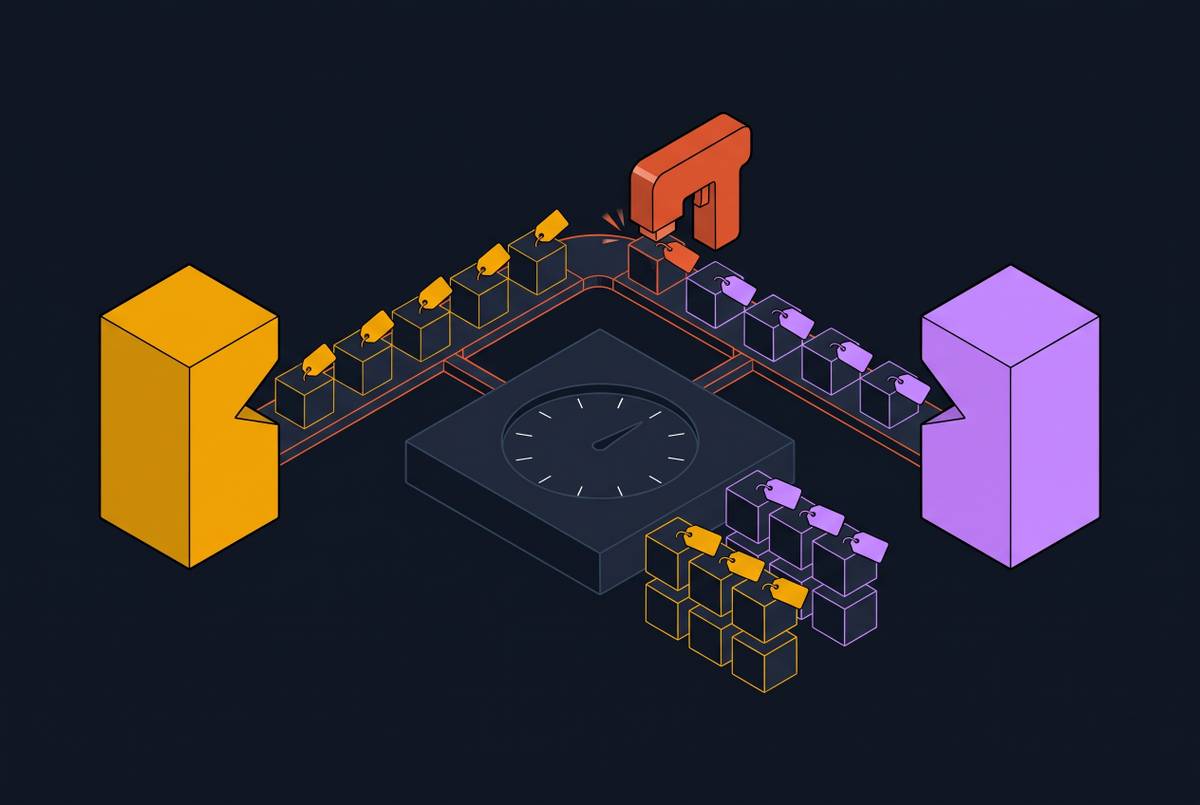
Review consumes a large share of the interval between a first commit and production. The constraint is not always building the change, but deciding whether it is safe to merge. Agents increase the volume arriving at that decision point.
Several dynamics compound the pressure. AI-assisted PRs tend to have larger diffs, agentic PRs wait longer for a reviewer to pick them up, and bot-authored code has a lower baseline acceptance rate than human-authored code. Larger changes take more work to check, waits for a reviewer lengthen the queue, and lower acceptance means less of the generated code gets delivered.
Coinbase shows that this bottleneck is addressable. Its PR review cycle time dropped by an order of magnitude after systematic intervention. The improvement required deliberate investment in review infrastructure alongside the deployment of agents. That distinction is central to the economics of agent adoption because the capacity to produce a PR and the capacity to approve it are separate investments.
Coinbase Wallet's delivery results followed that work. Simple mobile bugs and features that once took weeks now take under two days, and a request in Slack can produce a pull request and testable build in minutes. These outcomes show what becomes possible after the review constraint has been addressed.
Ramp offers another view of the same structural change. Its Inspect agent, built on Linear's API, connects specs, customer feedback, and code, and now writes more than a majority of the pull requests Ramp merges. Agent-authored diffs consequently dominate that review workload.
The operational response is to invest in automated review tooling and enforce smaller, scoped PRs. Agents should break a thousand-line diff into pull requests that a human can merge, comment on, or send back.
Stage four: CI/CD pipeline cost as the final hidden multiplier on agent throughput
CI/CD becomes the critical path when triage, execution, and review accelerate. Parallel agents send more PRs into the build pipeline at the same time. Infrastructure sized around one human committing at a time is not sized for eight agents working concurrently.
An agent may produce its change quickly and then wait on a build, accumulating compute charges while downstream work remains blocked. The cost includes both the CI bill and execution resources held against a bottleneck elsewhere in the system, which weakens the benefit of cheaper or faster generation.
Coinbase Wallet addressed build infrastructure as part of its move to cloud execution. The team shifted to cloud VMs with cached builds and repositories, reducing build times. Caching was part of the operating environment. This complements its review work by showing that a faster approval process still needs a build system capable of keeping pace.
Governance adds another layer to this stage. ISO 27001, SOC 2, HIPAA, and PCI-DSS require demonstrable controls over systems that can modify production assets. An autonomous agent with commit permissions that also triggers CI must be auditable through that path. The pipeline budget should cover logging and policy enforcement as part of the work of running agents.
Cloudanix documents a SaaS company that deployed agent guardrails before an organization-wide rollout. The controls covered DLP, credential protection, audit, and policy enforcement, with Coding Agent JIT replacing long-lived AWS keys with short-lived, scoped grants via MCP.
How should engineering teams choose cloud coding agents for the whole pipeline?
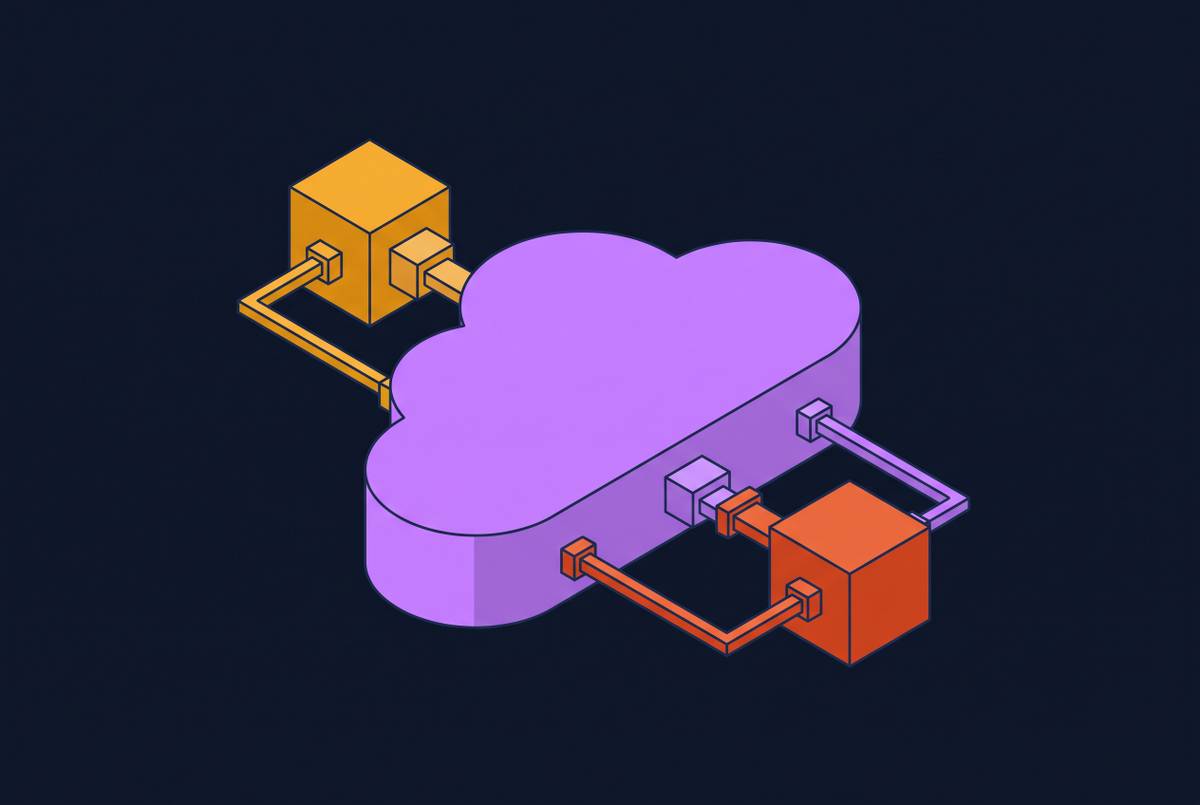
Whole-pipeline optimization treats the execution environment as a product in its own right. Cursor, Claude Code, Codex, and OpenCode operate on the same underlying class of work, with differentiation extending beyond the agent to hosting, governance, and integrations. The model is only part of the purchase. The environment determines how work reaches the agent, how parallel tasks run, and how their output enters review and CI.
Teams that organize their work in Linear can use Linear Agent to run Claude Code and Codex in sessions grounded in their workspace. Coinbase's Forge demonstrates a workflow spanning Slack, GitHub, and Linear through the SDK. That example supports evaluating integrated intake and context retrieval, but it is a company-built implementation rather than evidence that every agent offers the same triggers. A native integration, a custom agent, and an execution platform are different components.
For teams centered on GitHub Actions, Agentic Workflows places agent execution within that system, with the permissions and sandbox controls described earlier. For teams prioritizing concurrent execution, Cursor provides the concrete isolation model of Git worktrees on dedicated Ubuntu VMs using Firecracker microVMs. Codex runs specialized sub-agents in parallel and brings their results together. These workflow distinctions help teams choose agents suited to their priorities.
Moving agents from developer laptops to isolated cloud VMs gives teams a base for running more agents in parallel, with build infrastructure and security controls. Scheduled and event-driven work can also run without someone staying at the keyboard. Teams that want to avoid managing infrastructure should check whether hosting, audit controls, and credential controls come together without having to hire a separate service.
Teams should map all four cost stages before they choose tools. Teams should measure cycle time at each stage rather than only execution, enforce scoped PRs as the unit of output, and invest in build caching before increasing agent parallelism. Work should start in the systems teams already use, including Slack, Linear, GitHub, and GitLab, to avoid the cost of restating context. The decisive comparison is how effectively each candidate environment converts a ticket into a reviewed, tested merge.