Isolated VM per Task Versus Shared Containers in Cloud Coding Agents
Security isolation and resource costs create a tradeoff that routing can balance.
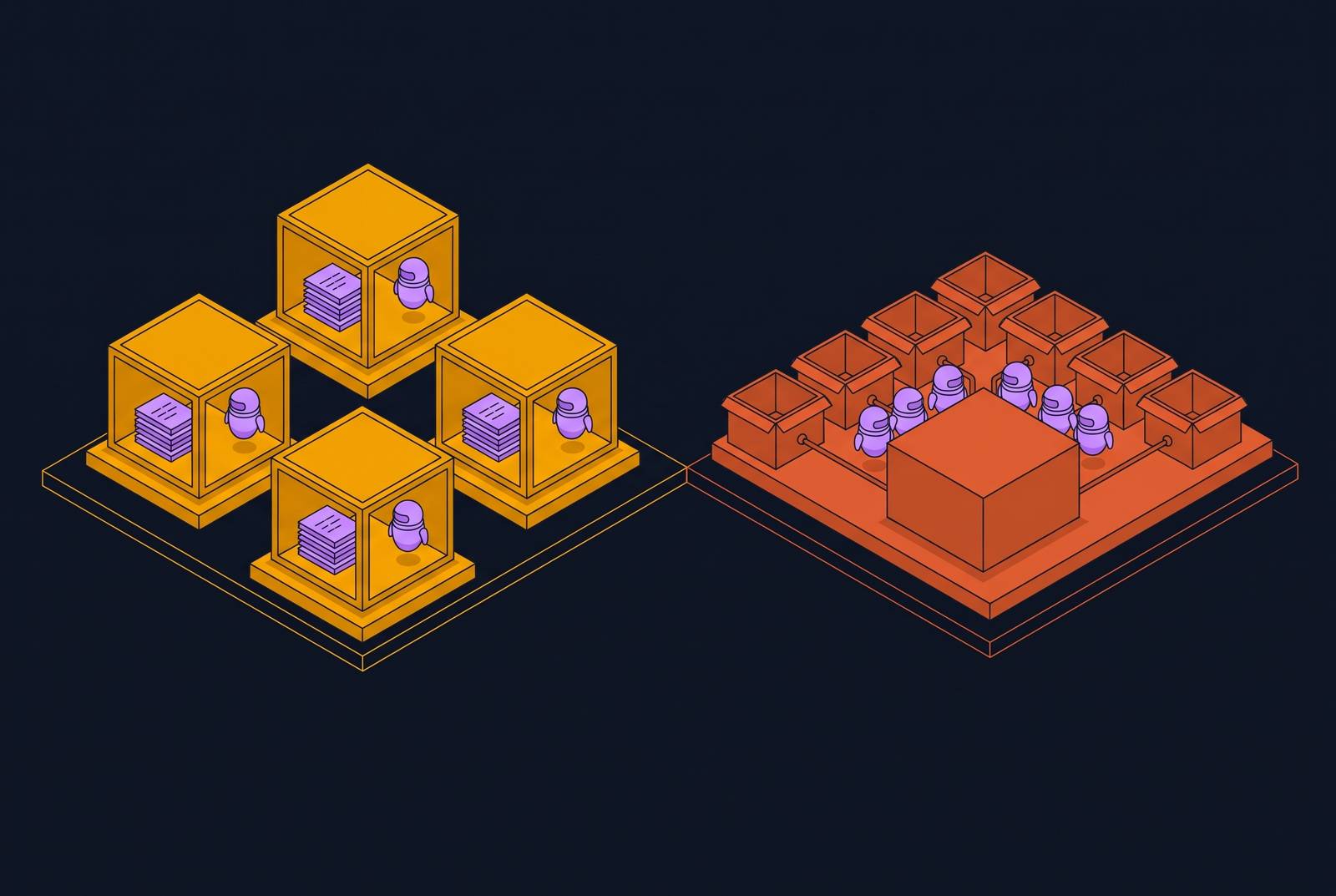
The choice between an isolated VM per task and shared containers sets what a multi-harness cloud coding agent platform can safely run, keep, and audit. Shared containers cost less per task at scale, while isolated VMs have a stronger security boundary and make it easier to keep a task going. For teams with mixed workloads, task-aware routing between those models is a sound starting point.
Why the isolation model shapes everything a cloud coding agent can do
Cloud coding agents run model-generated commands that nobody has reviewed. That changes the stakes of ordinary workload placement. An agent that installs dependencies, runs tests, drives a browser, and writes to disk exercises much of the access a developer uses locally. Those actions can reach another task, another team’s code, or the host itself if the environment permits that access.
The same access that makes an agent useful creates exposure when it makes a mistake or a task is compromised. Limiting that access can reduce the work it gets done, but giving it that access without a firm boundary widens the blast radius. Capability and containment are therefore inseparable infrastructure decisions. Reliability enters the same calculation because an environment must also preserve the work an agent needs to finish.
Why containers are not a security boundary for agents running untrusted code
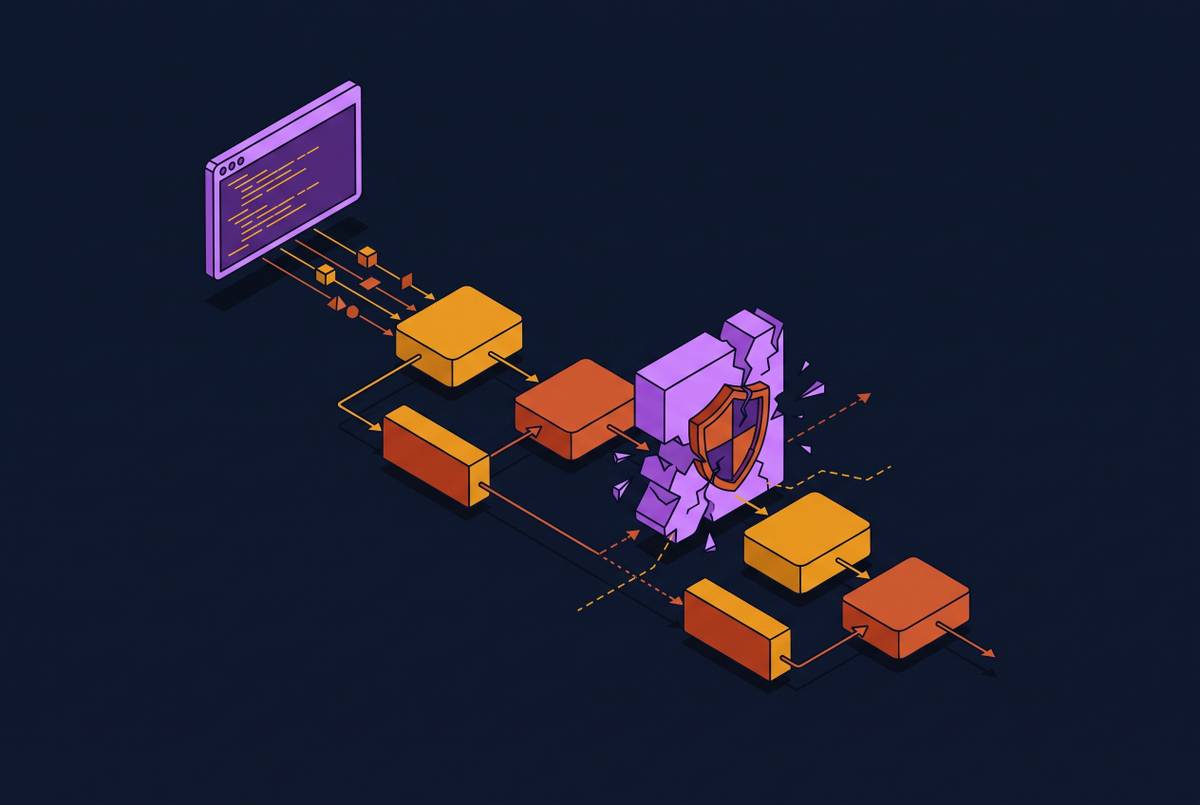
Containers share the host kernel with other workloads on the same node. They do not provide a separate kernel boundary. For untrusted agent execution, that leaves a large attack surface between a task and the machine hosting it. Documented container escapes show how that shared boundary can fail, although the affected components and required conditions differ.
CVE-2024-21626 exposed runc host filesystem access, while CVE-2024-0132 involved a TOCTOU vulnerability in the NVIDIA container toolkit. Docker’s security announcement describes CVE-2025-9074 as unauthenticated Docker Engine API access from a malicious Docker Desktop container, allowing additional containers to launch and potentially exposing host files. Host access was the consequence. CVE-2025-23266, known as NVIDIAScape, received CVSS 9.0. CVE-2025-31133 used mount race conditions for runc masked path abuse, while CVE-2025-38617 was a Linux kernel packet socket use-after-free that needed only CAP_NET_RAW.
A microVM places a guest kernel between task execution and the host boundary, so compromising that guest kernel does not itself grant host or adjacent-tenant access. Defects remain possible within that boundary. Thomas Winninger’s 2026 work describes hardware-isolated VMs, filtered network egress, and an intercepting inference proxy as baseline constraints that prompt instructions cannot grant or revoke. It explicitly rejects container sandboxes as an alternative for that design, without making containers unsuitable for every trusted, bounded workload.
What microVMs actually provide and how Firecracker-class performance erased the latency objection
MicroVMs provide a hardware-backed execution boundary without requiring guest code to run through software emulation. Guest code runs on the CPU itself through KVM. CPU overhead under nested-virtualization conditions has been measured at single-digit percentages, weakening the assumption that a VM necessarily imposes a large execution penalty. Stronger isolation no longer implies slow execution.
Dedicated-core VMs can also outperform containers on shared hosts because the latter face CFS bandwidth throttling. When daemon threads and garbage collection exceed a cgroup quota, the entire container freezes. That makes resource allocation part of the performance comparison. A lightweight container can still suffer latency from how its CPU time is governed, while a VM with dedicated cores avoids that particular shared-host constraint.
Startup is a separate dimension from execution speed. Restoring a microVM snapshot substantially reduces boot time relative to a cold boot, and perpetual-standby platforms preserve filesystem and memory state while paused. Those environments resume in tens of milliseconds. With Firecracker-class performance, startup delay alone is too broad a reason to rule out VM isolation, though speed for a given workload still depends on resource allocation and the environment lifecycle.
The real cost difference between isolated VMs and shared containers, and what drives it
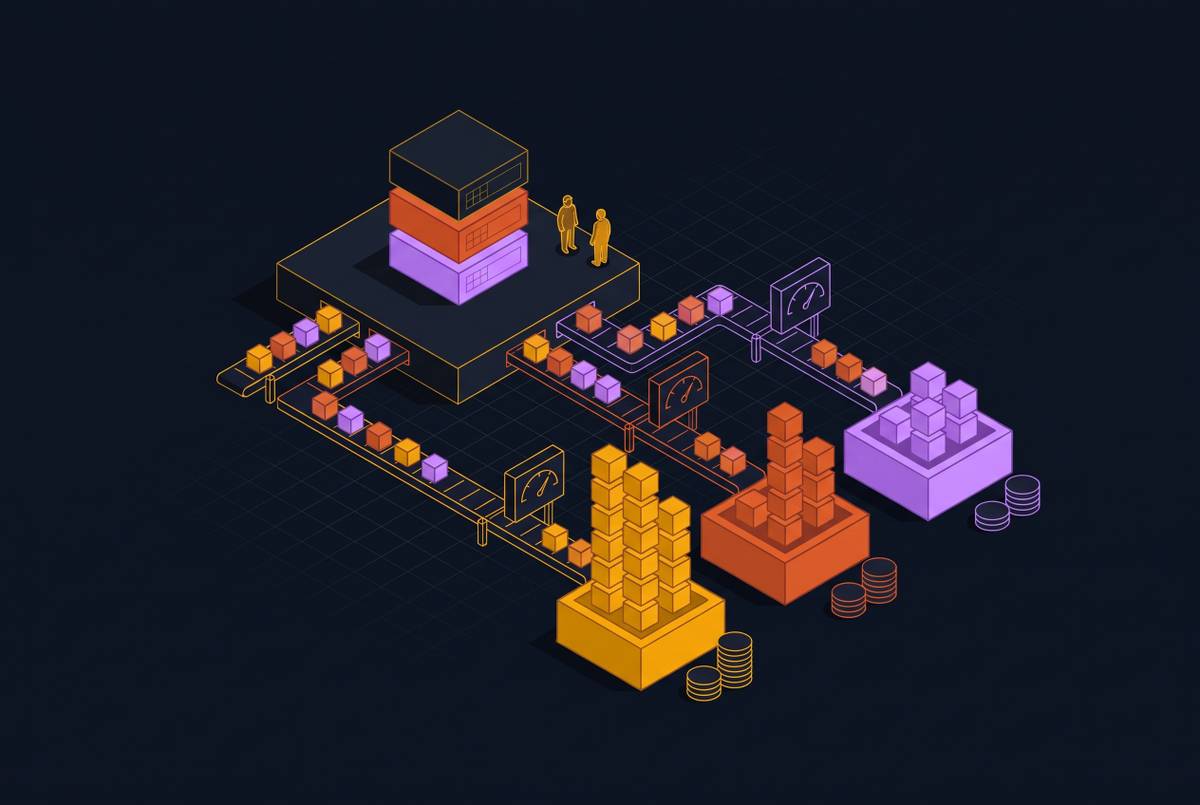
A node running many agent containers can process simultaneous tasks at a fraction of the cost of an equivalent number of separate VMs. Two costs create that gap. Raw compute pays for each task’s VM regardless of how fully the task uses it, while operational work grows with the number of VMs being orchestrated.
Choi et al.’s study, accepted for IEEE MASCOTS 2026, finds that CPU, disk I/O, and memory bottlenecks vary across agent tasks and even across requests using the same tool. Naive VM sizing can therefore over-provision resources or produce latency spikes. The study also finds that faster LLM responses or more CPU cores do not always accelerate agents. A larger allocation is not a proportional gain in useful output.
Billing and lifecycle policies can narrow the difference. Northflank Harnesses use per-second billing, with paused Harnesses consuming no compute. That eliminates idle compute charges rather than changing the resource requirements of active work. Task-aware sizing addresses waste during execution, while pausing addresses waste between periods of activity, making the economics different from those of always-on VMs.
How resource and performance dynamics differ by agent task type, and why this matters for infrastructure decisions
Retrieval, web search, and software engineering place distinct demands on CPU, memory, and disk I/O. Requests that use the same tool can still have different resource profiles because they use it in different ways. Concurrency exposes those differences more sharply. The Choi study finds task-dependent bottlenecks when multiple agent requests run together, challenging the assumption that one container configuration or one VM size can efficiently serve all requests.
CPU-aware tool admission and task-aware CPU allocation produced large latency improvements for CPU-sensitive tasks and reduced average latency across multiple tasks compared with undifferentiated native-agent deployments. Placement alone does not determine performance. The timing of tool execution and the allocation of resources also shape how quickly work finishes.
Writing a test or fixing a lint error presents a different blast radius from changing authentication code or handling credentials. A task can need stronger containment without needing more CPU, or need a lot of CPU without touching sensitive code. These differences call for routing each task to the isolation it needs.
How mature teams use a hybrid isolation model to match security guarantees to task sensitivity
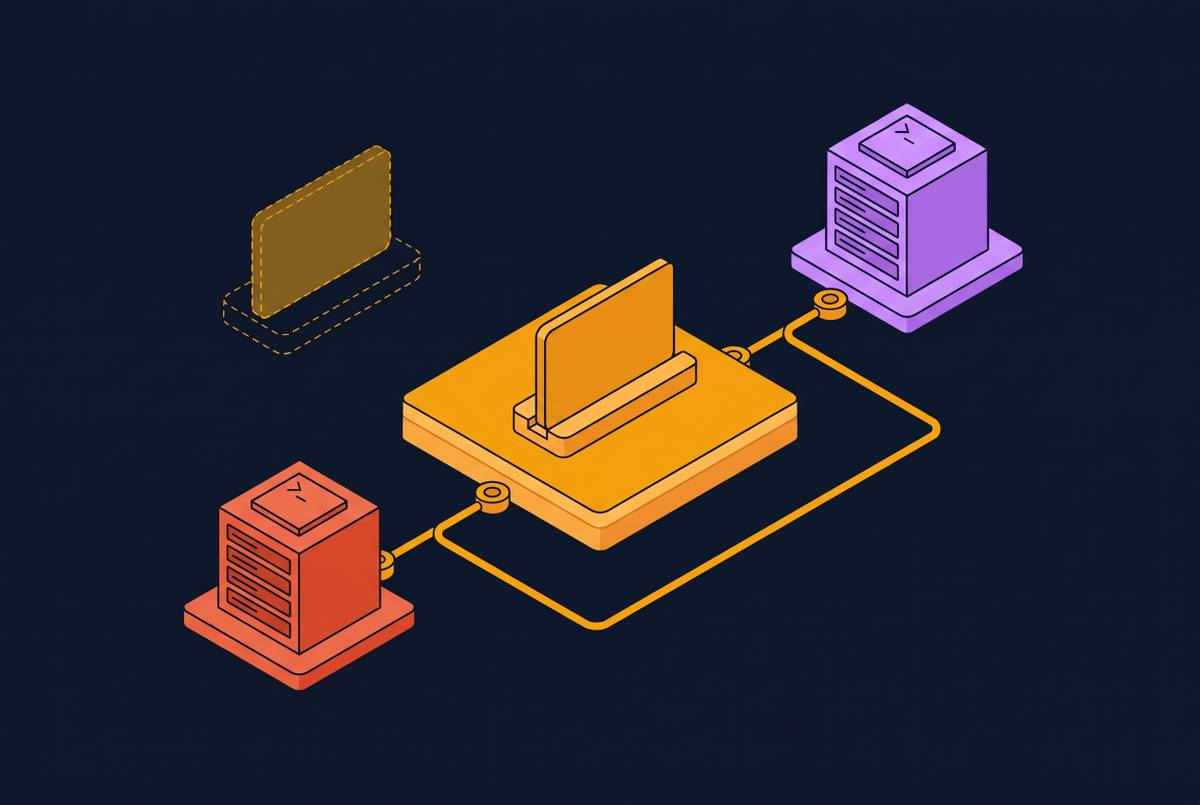
A hybrid architecture assigns routine work to shared machines with container isolation and sensitive work to isolated machines. Typical routine tasks include writing tests, fixing lint errors, and updating documentation. Work on a payments service, changes to authentication, and the handling of credentials belong in the higher-isolation tier. This division preserves shared-node density without making that weaker boundary the default for sensitive execution.
For teams adopting this model, the lesson is to classify sensitivity reliably, route without prohibitive delay, and make placement auditable. An isolation tier provides little protection if sensitive work is assigned elsewhere. The team must be able to check why a task was routed where it was, including any assumptions made when the task was submitted.
Sensitivity is not the only input to placement. Resource profiles show how much capacity a routed task needs, and how long it runs affects whether its environment must last through pauses or interruptions. The architecture consequently separates two decisions that are often conflated. One establishes the required boundary, and the other allocates enough resources within that boundary to complete the work efficiently.
What state management and long-running task continuity require from the isolation model
Multi-hour or multi-day tasks need more than a safe place to execute their next command. They need continuity across interruptions and periods of inactivity. Snapshot-and-resume, checkpointing, and session continuity work cleanly when each task owns an environment that can be paused and restored exactly. Shared environments make that ownership and restoration harder to maintain.
A recycled or restarted shared container can erase the context needed to continue. The agent then has to re-read the codebase and ticket, rebuild its context, and rediscover earlier decisions. Recovery consumes tokens and can degrade output quality. Files written, packages installed, and services started also accumulate during long tasks, creating opportunities for collisions or residual state when environments are shared.
Perplexity SPACE is designed for agents running hours to months, using rolling snapshots of live memory and files to support pause, resume, and branch across sandboxes. It reports median sandbox creation at 60ms. That approach needs per-sandbox isolation and a runtime that is kept between steps. Winninger identifies context length as a shared root cause of context and oversight problems, since neither humans nor models can hold an entire codebase in working memory. As context grows and weakly enforced guidelines drift, environment-level constraints keep rules in force in a way that prompts cannot.
How can engineers trigger coding agents from Slack and trace the resulting pull request?
Slack-to-pull-request automation connects a workflow trigger to task execution and then to a discrete, reviewable artifact. Stripe’s Minions integrates unattended coding work through Slack, CLI, and internal platforms to produce agent-authored pull requests. Linear’s customer case studies describe Ramp’s Inspect, built on Linear’s API and writing a majority of the pull requests Ramp merges, and Coinbase’s Forge, callable from Slack, GitHub, or Linear. These examples establish the workflow pattern. They do not, by themselves, establish which managed platform supports every requested harness.
For a buyer seeking a coding agent such as Codex from Slack without managing infrastructure, harness support and workflow integration are separate criteria from isolation. A multi-harness cloud coding agent platform also needs a clean association between the trigger, execution environment, and resulting pull request. The relevant record includes which harness, model, and credentials were used, what was installed, and which network calls were made.
Per-task isolation makes that attribution cleaner because the environment’s boundary identifies the run. Shared execution can intermingle actions and complicate reconstruction when a pull request contains an unexpected change or a dependency was modified. Observability is still needed, and isolation makes clear which run an observation belongs to. That distinction becomes especially useful when several agents execute in parallel.
OpenAI’s Codex documentation says that internet access is blocked by default during the agent phase, but setup scripts still have internet access to install dependencies. This separates setup permissions from execution permissions. GitHub Copilot’s Linear integration uses an ephemeral GitHub Actions environment, streams updates to the Linear activity timeline, and requests review when work is ready. Both patterns tie workflow behavior to a bounded task environment, although a network namespace or ephemeral runtime alone is not the hardware boundary a microVM provides.
Choosing the right isolation model for a given workload — a practical decision framework
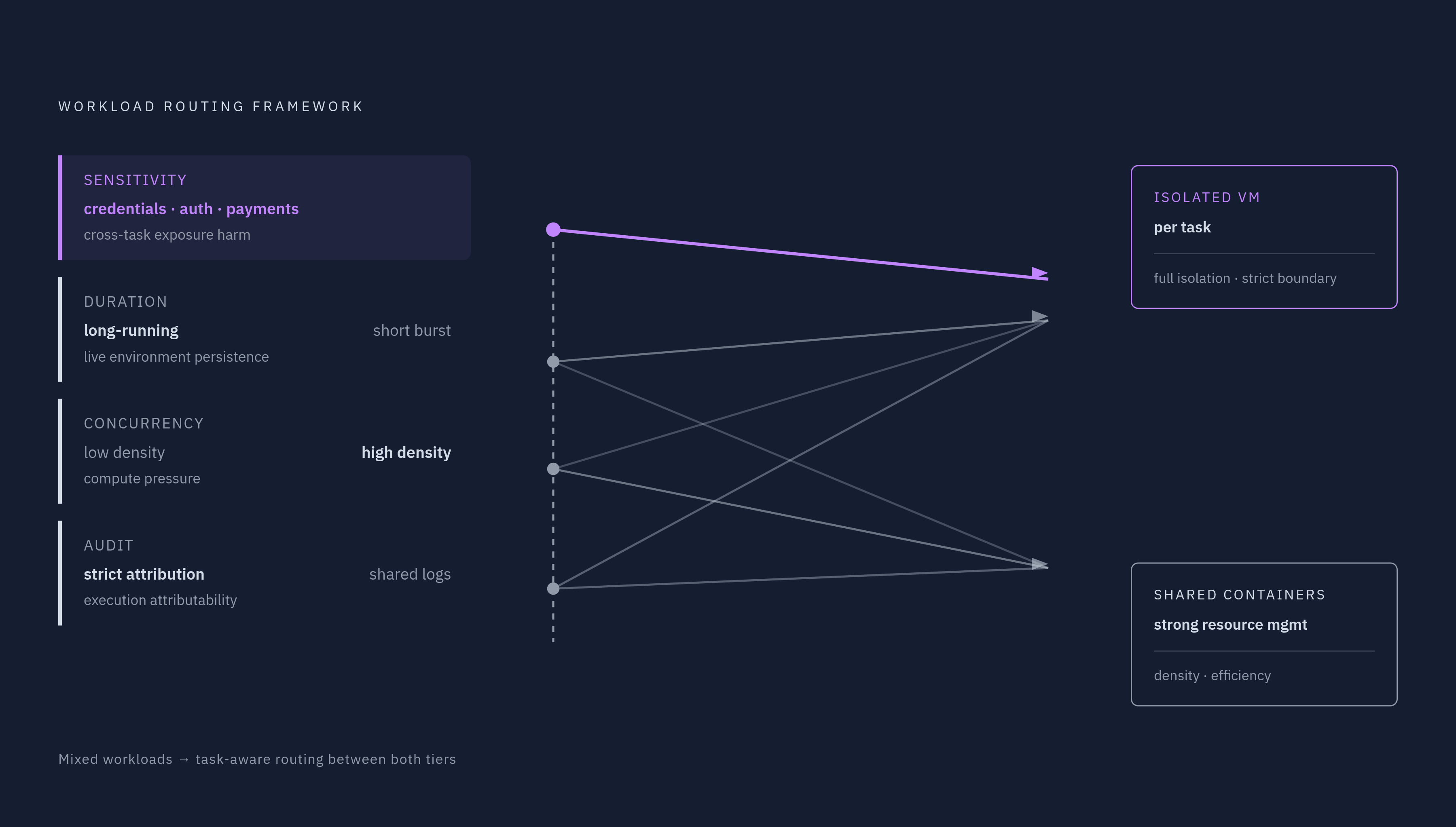
The decision turns on four criteria, which are code sensitivity, task duration, concurrency, and audit requirements. Each tests a different part of the architecture. Sensitivity sets how much harm cross-task exposure can do, while duration affects how much it helps to keep a live environment. Concurrency establishes the pressure on compute density and orchestration, and audit requirements establish how precisely execution must be attributable afterward.
An isolated VM per task is the appropriate choice for credentials, secrets, authentication code, payment logic, or data whose leakage would have serious consequences. It also suits extended tasks requiring checkpoint-and-resume or session continuity. The need for review, compliance, and cost accounting for each task adds to that case. So does the need to install packages, run services, or drive a browser without affecting another task.
Shared containers with strong resource management are acceptable for short, bounded tasks that avoid sensitive code and credentials. Code that the team owns, trusts, and has reviewed lowers the practical risk of running untrusted instructions against a shared kernel. Cost density can justify this choice when the security tradeoff is explicitly understood and accepted. The label “routine” is not enough if the task’s actual access or execution behavior falls outside those conditions.
For mixed workloads, task-aware routing between isolation tiers is the practical default, with reliability and auditability required of the router itself. Teams assessing a platform should look as closely at how it places tasks as at the harnesses or workflow triggers it supports. Each task must receive the boundary, resources, continuity, and attribution its work requires.