Cloud Agent Licensing When You Outsource the Runtime Layer Entirely
Autonomous agents shift licensing spend from seats to compute.
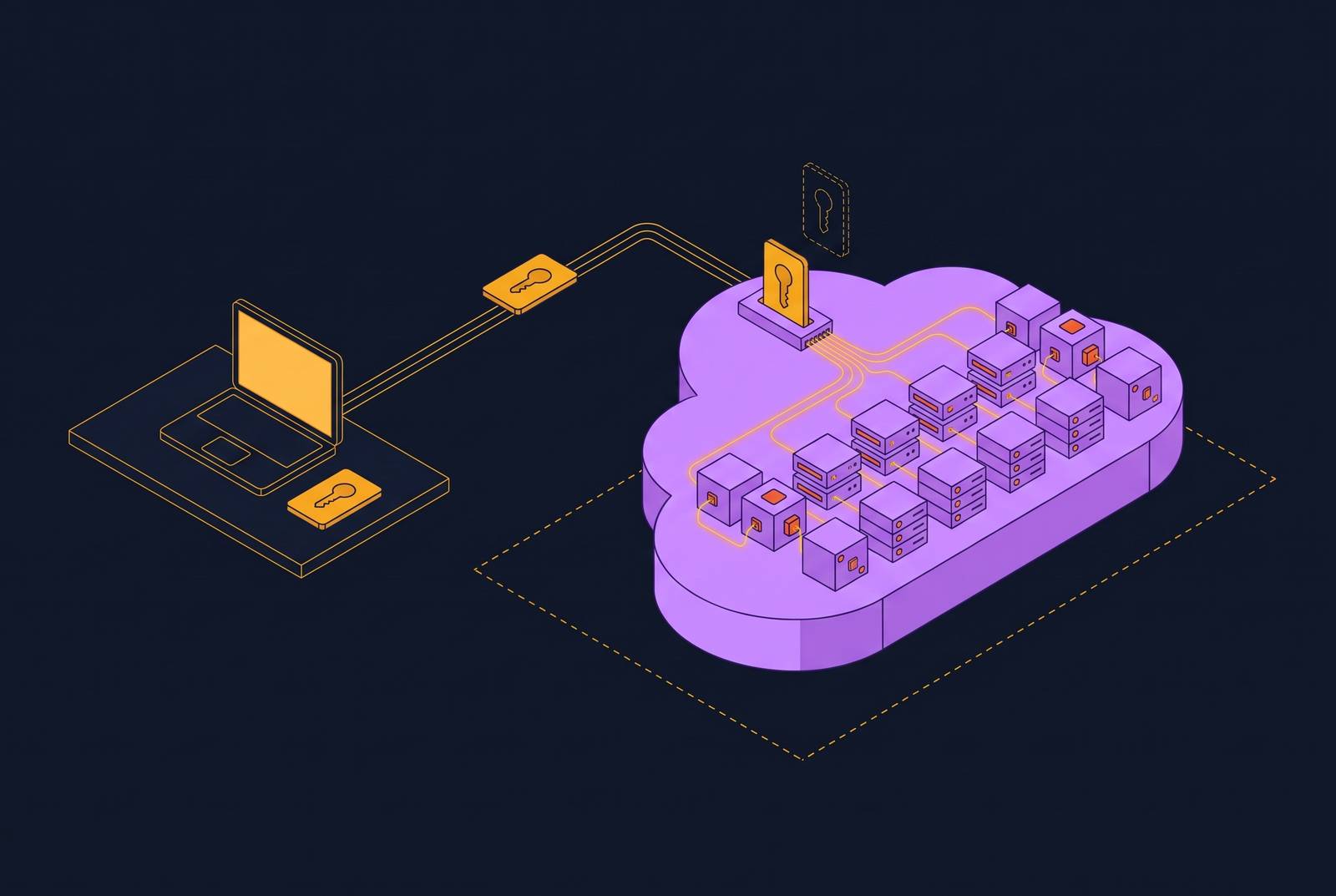
To run Claude Code in the cloud without managing the runtime infrastructure, teams can outsource agent execution while keeping model credentials, governance, and PR-based output separate from the agent harness. With autonomous work, more of the licensing budget goes to compute consumption and less goes to human seats. Engineering leaders therefore need to budget for workload volume and parallelism, while preserving control over spending and the freedom to change agents.
Why the seat-license model breaks down when agents own the runtime
A seat license feels predictable because its unit is a person with bounded working hours. An autonomous agent can run continuously, start on a schedule, respond to events, or execute beside other agents. Once the agent owns the runtime, the number of people authorized to use it no longer describes the amount of work being purchased.
That mismatch becomes concrete when teams give consumer-subscription credentials to unattended workloads. An allowance meant to last a human workday can run out in an hour of autonomous execution, while heavy agentic use through Anthropic’s API could cost more than $1,200 per month. The subscription price is not a workload estimate. Nor does a flat plan establish how much concurrent execution the allowance will support.
Vendors are responding with metered credit pools, consumption-based plans, and separate programmatic allowances. These mechanisms differ, but each separates access from the resources autonomous work consumes. For a buyer, the relevant distinction is therefore not simply subscription versus API. It is whether the contract describes a bounded allowance, a metered service, or an allowance that becomes metered when exhausted.
How the major cloud agents actually bill for autonomous work today
Anthropic bundles Claude Code and Claude chat into a shared pool on subscriptions, with a rolling five-hour window and a weekly cap. Chat and coding therefore compete for capacity. An afternoon of chat reduces what remains for autonomous agents, so the coding allowance cannot be budgeted independently of other use. Anthropic publishes capacity multipliers. “5x” describes capacity relative to Pro.
Anthropic’s cost documentation states that reaching a subscription cap does not stop work when usage credits are enabled. Overflow bills at standard API rates. Enterprise makes the two charges clearer: teams pay a seat fee to use the platform and API rates for what the agent uses. That distinction changes what the seat purchase buys, even though both arrangements provide access to the same agent.
Cursor has been seat-priced on the surface but metered underneath since June 2025. Auto mode joined the meter on August 24, 2026, and a new plan structure launched October 12, 2026. The headline seat price is therefore incomplete. A budget must also account for the metered usage associated with the plan.
OpenCode is MIT-licensed and free, with teams paying for models through their own keys or its Zen and Go services. Provider choice is its defining licensing advantage. However, Anthropic prohibits routing Claude Pro/Max subscription OAuth tokens through third-party agents, so Claude use requires an API key or, for Max/Team subscribers, the monthly Agent SDK credit.
The hidden variable that blows up agent budgets: parallelism
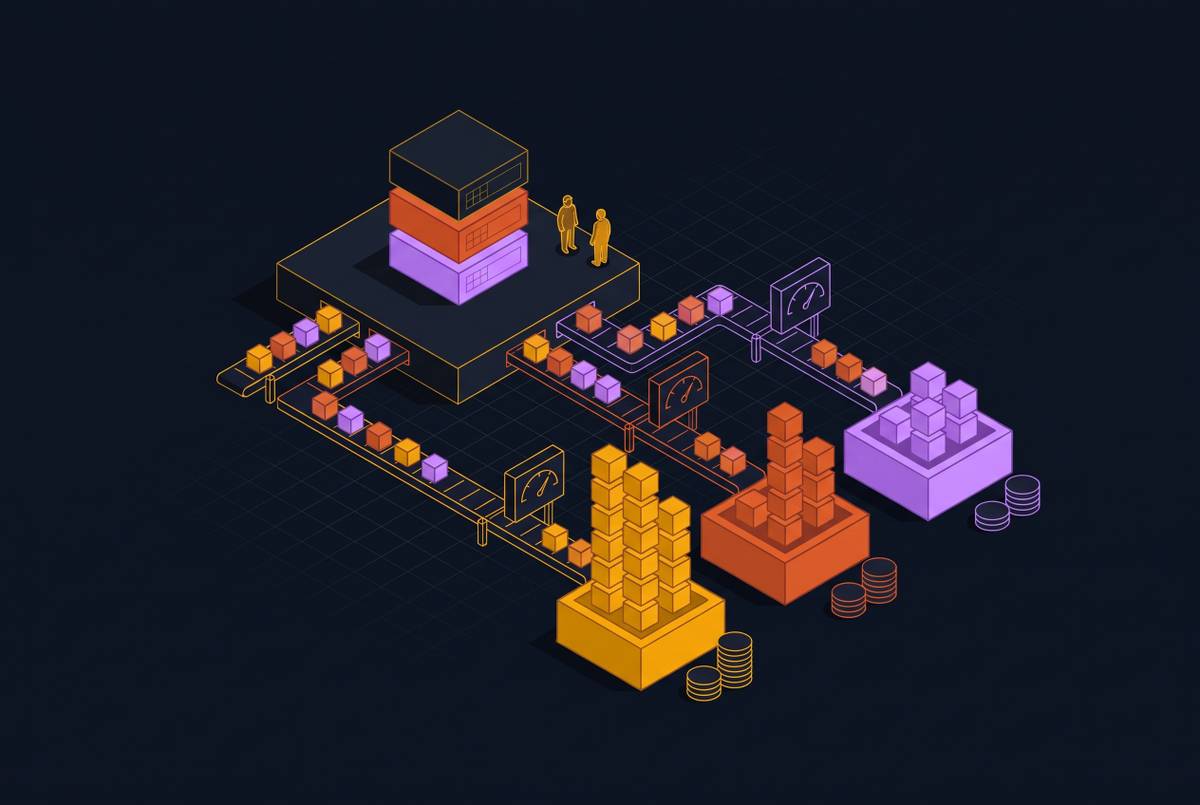
Parallelism is both the productivity case for cloud execution and the multiplier that complicates its budget. Four agents running in parallel use up a five-hour allowance roughly four times faster than one. Capacity is not the same as concurrency. A subscription multiplier describes relative allowance.
For maximum throughput, the recommended pattern is to specify features as vertical slices, give each slice its own git worktree, and launch a separate agent per branch. Each agent runs a full quality pipeline before it opens its PR, without waiting for the others. That independence removes a serial bottleneck. It also means the budget must cover agents running at the same time, as well as how long the whole job takes.
The productivity payoff is clearest in parallelizable, read-heavy workflows, where multi-agent setups can shorten execution and lower cost per completed task compared with a single large agent. A reported mid-market IT services firm with 180 engineers ran three specialist agents on every PR open, assigning code correctness, security, and test generation separately. Their outputs became one PR comment within seconds. The team reportedly reclaimed dozens of hours of senior engineer time each week.
The budget risk comes from the same mechanism. At fleet scale, many individually reasonable tasks can consume substantial resources together, particularly when agents run without limits and usage reporting lags. Parallelism makes visibility essential, because evaluating the savings from faster execution requires knowing the total cost of the concurrent work.
What automated PR review and production triage look like under compute billing
Automated PR review addresses a throughput constraint created when code generation outpaces human review. Instead of waiting for a person to inspect every dimension sequentially, specialist agents can examine the same proposed change and consolidate their findings. When an author amends commits during review, version alignment becomes a practical problem, while auto-merge requires calibrated confidence thresholds rather than an assumption that every agent finding is equally reliable.
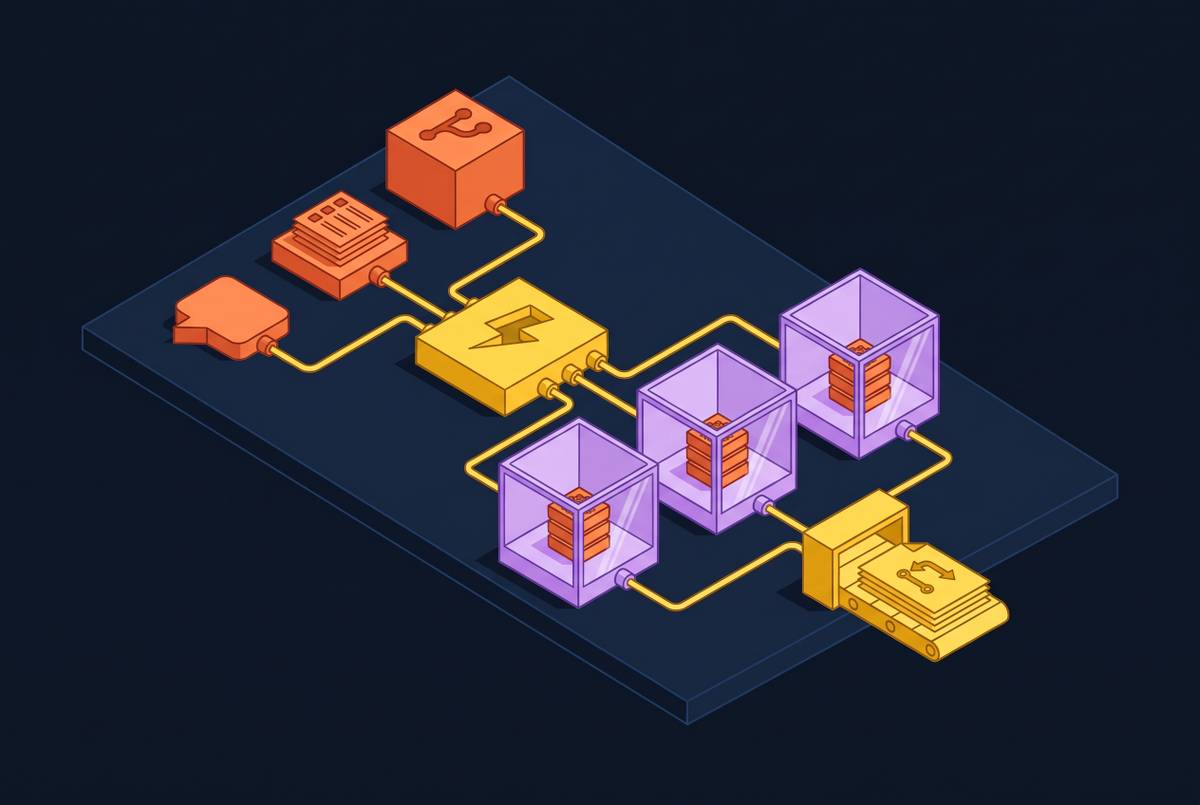
An alert can trigger an agent to investigate the root cause, propose a fix, run regression tests, and return findings to the Slack thread where the alert appeared. The self-healing incident pattern can also correlate an alert with a recent deployment and propose a rollback before on-call gets paged. The output remains a proposal subject to authorization for production changes. That distinction separates useful investigation from the permissions needed to act on it.
Sentry connects alerts to this workflow through integrations with GitHub, GitLab, Jira, Slack, Linear, and PagerDuty. Its Slack integration lets alerts arrive in the same threads where agents get their assignments, so teams do not need a separate triage interface. Each trigger becomes a compute event. Under per-ACU or per-token billing, costs follow PR and alert volume rather than engineering headcount, making the accounting better aligned with execution. Those same events are also what governance must meter and constrain.
Governance and security controls that compute-consumption billing requires but does not include
Consumption billing records resource use, but it does not supply the controls that make autonomous execution safe. Cost accountability moves to the engineering team. Teams need usage caps, audit logs, secret scanning, and execution isolation as part of their infrastructure, rather than as extras they can choose when buying an agent. A metered invoice is not evidence that spending or access was governed while the work ran.
The enterprise evaluation starts with SOC 2 Type II certification, SAML SSO, granular admin controls, and deployment options that keep code out of vendor training sets. Operational governance then requires SSO integration, audit logging connected to a security monitoring system, secret scanning on agent PRs, PR policy gates, license governance, sandbox isolation, and incident response runbooks. These controls address different failure paths. Secret scanning does not replace isolation, and audit logging does not replace a policy gate that determines whether a PR may proceed.
Regulated workloads can also limit how completely the runtime may be outsourced. Where source-code privacy and FedRAMP, HIPAA, PCI-DSS, or EU AI Act obligations require self-hosting, infrastructure ownership becomes a structural requirement. Convenience does not remove that constraint. The deployment decision must account for the compliance exposure as well as the cost of operating the environment.
Governance also determines how expensive a later agent change will be. If credentials, logs, and access controls are embedded in one harness, replacing the agent requires rebuilding part of the security architecture. The durable boundary is the execution environment. Keeping governance there lets a team replace Claude Code with Codex or OpenCode without reconstructing the controls around every task.
What switching agent harnesses actually costs when the runtime is in the cloud
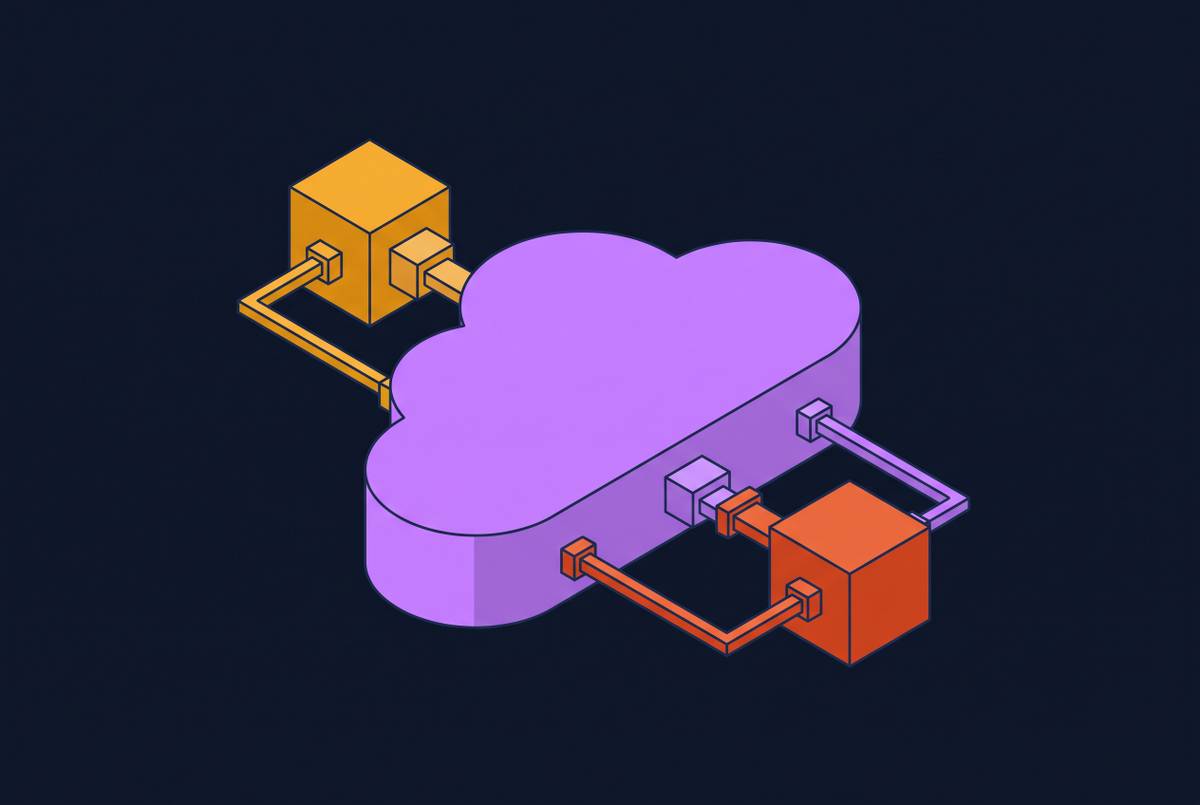
Cloud execution reduces lock-in only when the environment remains independent of the harness. The practical test is whether a team can change agents without changing how PRs arrive, how activity is audited, or how model credentials are managed. Otherwise, the dependency has merely moved from the IDE to the harness.
OpenCode illustrates the trade-off between provider portability and operating responsibility. Its license and bring-your-own-key model remove the platform fee, but the team must manage model accounts and their costs. Portability does not guarantee equivalent subscription economics. Because Anthropic restricts third-party use of Pro/Max subscription tokens, moving a Claude workload to another harness can also change how it is billed.
Cursor provides a different example of the cost attached to provider choice. Teams and Enterprise plans add $0.25 per million tokens for third-party model usage, so bring-your-own-key use still incurs a platform surcharge. The integration boundary adds another switching consideration. When agents receive tasks through Slack, Linear, and GitHub, changing the harness need not change where colleagues initiate work, whereas a proprietary entry interface introduces a workflow dependency.
Teams that use isolated cloud VMs, their own model keys, and standardized PR output keep the same contract with the rest of the organization. The agent may change while review remains familiar. This separates the replaceable execution tool from the credentials, controls, and review process that should outlast it.
A practical framework for budgeting agent workloads under compute-consumption billing
The budgeting process should begin with workload type, parallelism width, and governance requirements. Heavy, sustained daily use by an individual often costs less on a Max or Ultra subscription than through the API because the subscription acts as a bulk discount. Automation has a different billing fit. CI-triggered tasks, PR reviews on every open, and production alert triage grow with the amount of work coming through, so API or ACU billing fits them better than seats. Intermittent or exploratory use fits lower-tier plans or pay-as-you-go, provided usage credits are disabled or capped.
Usage controls should be set before deployment. Teams need at least caps, spend alerts, and per-agent credential scoping, especially when usage dashboards fall behind the work being done. An unattended agent should not rely on a person noticing yesterday’s consumption. Parallelism belongs in this decision because the same task pattern can exhaust an allowance much faster when spread across several agents.
The primary output metric should be cost per reviewable pull request. Unlike cost per seat, it ties spending to work the team can check and merge, while token counts show how much was used without showing whether the result was useful. This gives finance an output-based comparison. PR-level cost visibility also makes it possible to discuss payback in terms of completed work and reclaimed engineering time, rather than presenting resource usage as proof of productivity.
Isolated VMs, standardized PR output, bring-your-own-key model accounts, and environment-level governance preserve the parts of the system that need not change when models are repriced or harnesses evolve. The next agent should be a replaceable component.